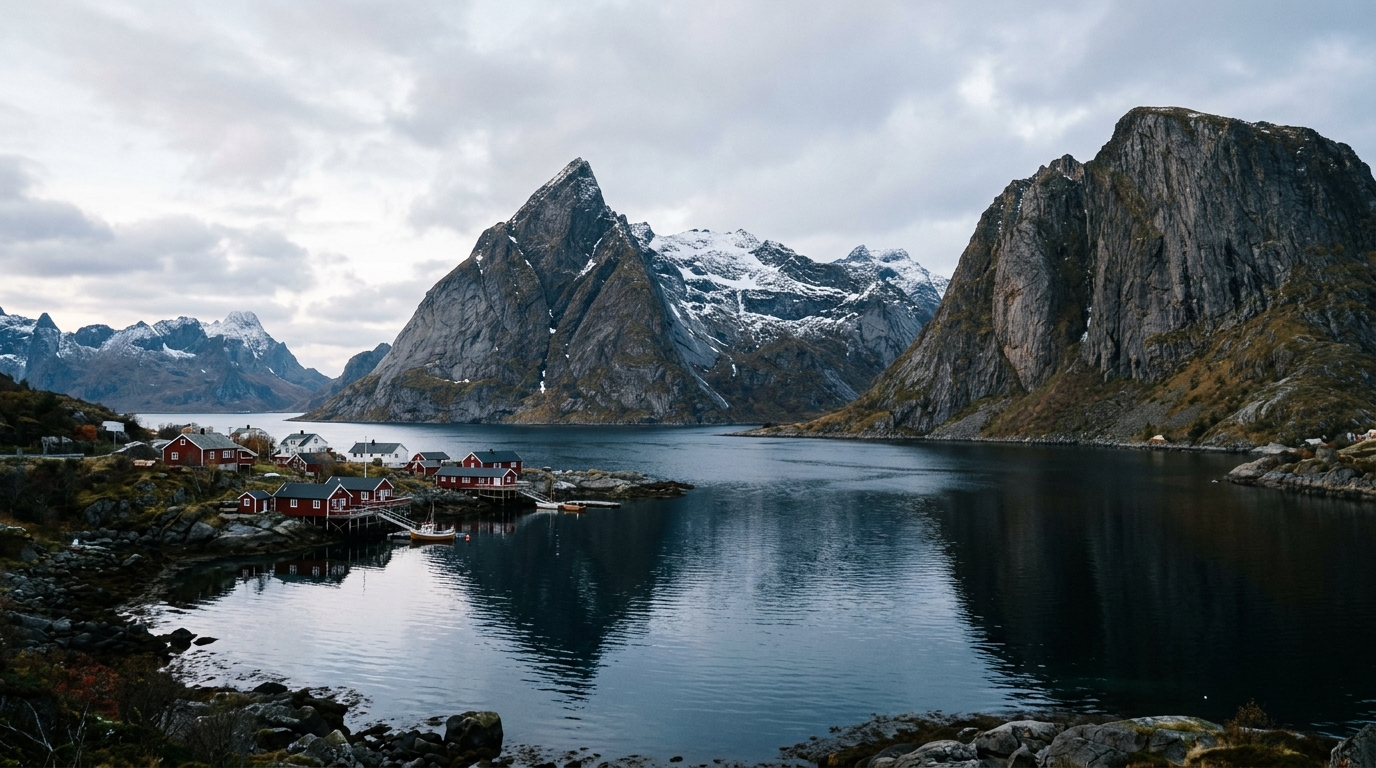
wet rock, a concrete slipway, one boat a week, the light turning
Reserve a nine night trip to Vesteralen, Norway, with seven nights on Anda
Nine nights in Vesteralen, seven of them on Anda, a 900 meter island three and a half nautical miles off the north shore of Langoya, from $3,108 per person on two sharing. The reservation covers the Thursday boat out, the Thursday boat back seven days later, the whole keeper's house at the light station and the warden who has to be ashore for as long as anyone else is. People go for a week in which weather is the only thing on the calendar.
Send a booking requestThe Pine Gazette answers every request within one business day.
Anda is a low island in the Vesteralen archipelago at 69 degrees north, three and a half nautical miles off the north shore of Langoya. It is 900 meters end to end, its high point is 21 meters, and the only building on it with beds in it is the keeper's house beside the light. To reserve a nine night trip to Vesteralen on this rung is to reserve that house whole, the warden who must be ashore for as long as guests are, the landing permit the operating company holds for the seabird reserve, and the boat that goes out on a Thursday and comes back the Thursday after.
That boat runs weekly between the third week of August and the last week of September, once each Thursday, and there is no second operator on that stretch of water to fall back on. The company that runs it carries passengers under its own licence, writes its own contract with you and sends you its own invoice; Pine Gazette Bookings LLC asks it to hold places on a named date and confirms to you in writing what has been agreed to. No money passes through this office at any stage of that. Reaching Norway is yours to arrange, since we sell no air travel of any kind.
A permit, a ranger, a boat with one sailing a week, the single bed there is. Everything else is the traveller's own.
No rung is better than another. Each one is a different amount of work for the traveller and a different figure.
What is left to you is most of the nine nights: the two nights ashore at either end, the car, nine days of food, the driving, and every waking hour of the seven days once you have been landed. Lower down the ladder somebody meets you at the airfield and somebody decides where lunch happens. Here the three things that genuinely cannot be arranged from a laptop are arranged, and then you are alone with 900 meters of rock.
- What it costs
- Nine nights, from $3,108 per person.
- What this reserves
- On this rung Pine Gazette Bookings LLC reserves the two crossings, the seven nights in the keeper's house, the warden's week and the county landing permit the operating company holds for the seabird reserve, and it reserves nothing else: not the car, not the two nights ashore, not one meal.
- Shape of the booking
- One reservation holds the whole keeper's house, three rooms and six beds, for seven nights, with the Thursday boat out, the Thursday boat back and a warden ashore for every hour in between.
- Who books it
- Somebody reserving this wants six days on which nothing can reach them and no hour of the day belongs to a stranger with a clipboard.
- Why somebody chooses another rung
- If a return crossing that can slip two or three days sends you counting backward to a Monday meeting, take one of the guided rungs instead, where somebody drives every day and the dates hold.
- In the figure
- The whole keeper's house at the light station for seven nights, three bedrooms and six beds; the crossing out on a named Thursday and the crossing back the Thursday after, carried by the operating company under its own licence; the warden ashore for the full seven nights; the county landing permit the operating company holds for the reserve; freight of up to 120 kilos of your food and gear out and every bag of your rubbish back; bed linen, towels and blankets; split birch for the stove and 60 liters of drinking water landed with you; gas for the two ring cooker and fuel for the two generator hours a night; a briefing at the harbour the evening before the boat; and a written statement from the operating company of what it will charge you and when.
- Not in the figure
- The flight, which this office does not sell and which you arrange yourself, $980 to $1,720 round trip from the American South in September; the drive north from the airfield, two to three hours, in a small rental car at $65 to $105 a day; fuel and road tolls, $70 to $130 for the week; the night before the boat and the night after it in the harbour village, $135 to $210 a night for two; nine days of food bought in Sortland or Myre, $190 to $320 per person; a satellite messenger on hire, $9 to $16 a day; sea boots and full waterproofs if you do not own them, $120 to $260; any extra night ashore when the return crossing is held by wind, $135 to $210 a night; meals in the village at either end, $22 to $45 per person; and anything you drink.
- Who should not book it
- Landing is up a wet concrete slipway with a two meter steel ladder at low water, carrying your own bags, and there is no other way onto the island. Once the boat has gone nothing arrives for six days: no shop, no road, no second building, one bar of signal on the south wall of the house and nowhere else. If a fixed date on the far side of this trip matters to you, do not reserve it, because the return crossing has been held three days by wind more than once and nobody will promise you otherwise. Seven nights of wind, rock, seabirds and each other flattens some people by the fourth day, and the fourth day is when the boat is furthest away in both directions.
This is a starting figure, worked out for two people sharing a room. Costing the exact days you name runs two to four working days, since the firm operating the trip has to answer first. No air ticket is ever inside it.
The crossing, and the Thursdays it does not happen
The boat is an eleven meter workboat with a heated cabin, eight passenger seats and open deck aft for freight. In flat water the crossing takes 55 minutes. In a northwest swell it takes an hour and forty, and the skipper will not go at the slipway above about 1.5 meters of swell or above twelve meters a second of wind, because there is one place on Anda where a boat can put a bow ashore and that is a concrete slipway on the southeast side, poured in 1952 and patched twice since. At low water the last part of it is a steel ladder bolted to the wall.
If Thursday is blown out the attempt moves to Friday, then Saturday. If the week cannot be recovered the operating company re-dates the whole reservation to the next Thursday it can run and tells you under its own terms what that does to the invoice. Coming back is the same arithmetic in reverse, which is why the itinerary we put on paper for you carries two clear days at the end and why we will say so again on the telephone.
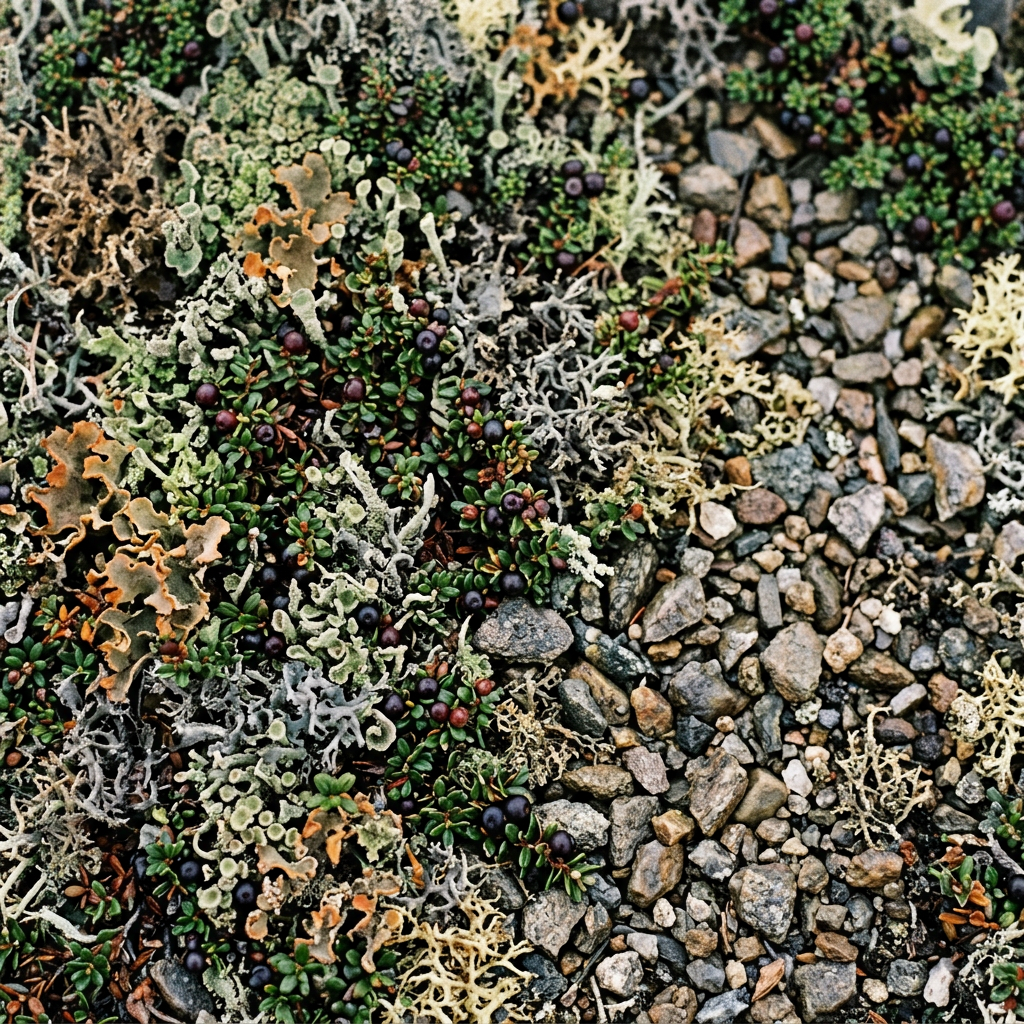
Seven nights in the keeper's house
Three bedrooms, six beds, one long room with a table for eight and a wood stove that carries the whole house. Water comes from a 3,000 liter cistern under the north gable and from the 60 liters landed with you. Power is a roof array and a small generator that runs two hours after dark, so there is electric light and there are sockets in those two hours and not at any other time of the night. The toilet composts. Washing is a basin of heated rainwater. The cooker is two gas rings and an oven nobody has lit in years.
The light was automated in 1987 and turns without anyone attending it, one sweep every twenty seconds, all night from the middle of September onward. The warden keeps the station and logs what comes and goes on the ledges. She is not a cook, not a guide and not a driver, and the reservation does not pretend she is; what she will do is tell you which rock the eagles use in the morning and which side of the island is walkable when the swell is in the west.
You land with nine days of food because there is nothing to buy and nobody selling. Most people cook one hot meal a day and eat it at the long table at seven because the generator hours make that the simple thing to do.
The water, the light and the weeks the island is shut
- mid April to 15 August
- the reserve is closed to landing while the birds hold the ledges, and nothing we ask changes that
- third week of August
- first crossing of the season, about sixteen hours of daylight, and the puffins have already left the west side
- early September
- roughly fourteen hours of light, water about 11 degrees Celsius, first autumn gales through the channel
- equinox week
- the day shortens by about a quarter of an hour every twenty four hours and full dark returns to the slipway before ten at night
- late September
- last boat of the year, water nearer 9 degrees, aurora on the clear nights and rain on most of the others
- October to March
- cistern drained, stove cold, station shut, and no landing is arranged at all
- late November to mid January
- the sun stays under the horizon at this latitude for about seven weeks
- late May to late July
- the sun does not set, and the reserve is closed for every day of it

The two nights ashore, and the ground you can reach
Myre is 38 road kilometers from Sortland on a road kept open all year, and the harbour the boat leaves from is at the end of it. Twenty three kilometers further out, past Sto, the tarmac stops at Nyksund, which emptied in the 1970s when the boats grew too big for the entrance and now has a dozen houses lived in again. The marked walk between Sto and Nyksund is 15 kilometers over the ridge with about 400 meters of climb, five to seven hours for most people, and the seaward half of it is on wet rock with no shelter for two hours at a stretch.
If you take the extra day on Andoya instead, the beach at Bleik runs 2.5 kilometers of pale sand and the bird rock offshore stands 160 meters out of the water. The seabed drops past 1,000 meters within ten nautical miles of Andenes, which is why sperm whales feed there in every month of the year. Inland, on Hinnoya, Moysalen tops out at 1,262 meters and holds snow in its north gullies into July. None of that is in this reservation. It is here because people ask what to do with the nights the island cannot use, and because a rented car and a paper map cover all of it.
How the reservation is put together
Send us your month, the number of people and whether you want the house for two or for six. We go to the operating company for the Thursday it can run, for the warden's week and for the permit, in that order, since the permit governs everything after it. Costing a specific set of days and getting the figures onto paper takes two to four working days, and we would rather take the four than send you a number we have to correct.
Pine Gazette Bookings LLC owns no boat, no rooms and no seat on anyone's deck. The company that runs the crossing and keeps the light station bills you directly under the contract it writes with you, and the office earns nothing from you at all. The Pine Gazette works from 2450 Severn Avenue, Suite 312, Metairie, LA 70001, and takes requests from New Orleans and from anywhere else in Louisiana or outside it by telephone at +1 (504) 832-6194 or in writing at bookings@thepinegazette.com. If a figure or a date on this page looks wrong to you, write to corrections@thepinegazette.com and we will go and check it.
Send a booking request
This form takes booking requests 24 hours a day. A person reads it and answers within one business day. Sending it is not a reservation, it costs nothing, and this office will not telephone or text you unless you ask it to.