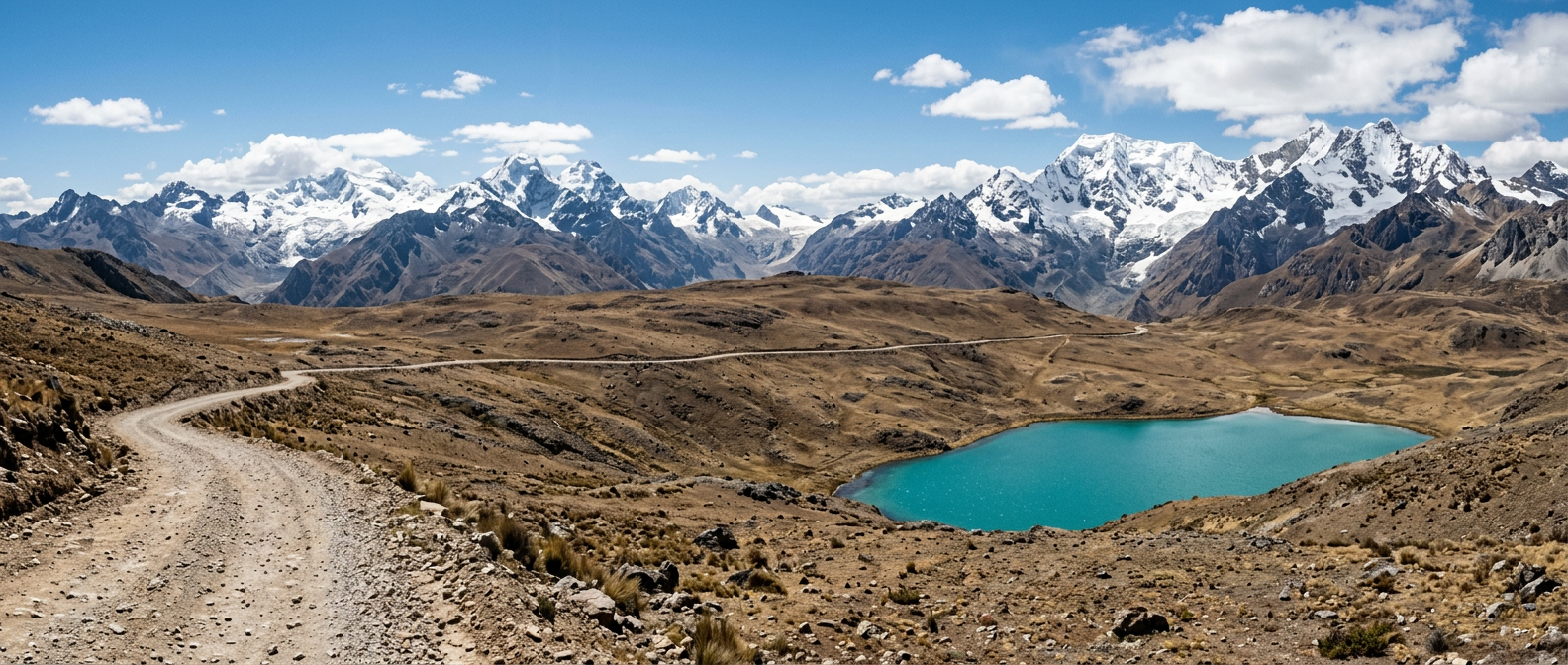
dust on the windshield, salt tea, a stove lit at four
Reserve a thirteen night Pamir Highway trip in Tajikistan
Thirteen nights across the Pamir with the GBAO permit filed, a driver and a 4x4 held for nine road days, and three beds reserved by name in villages where a bed has to be spoken for weeks ahead, from $2,415 per person on two sharing. The reason to go is the ground east of Khorog, where the road holds above 3,500 meters for four days and the villages up there heat their houses with roots dug off the plain. The other ten nights, and every meal outside those three houses, you settle yourself as you go.
Send a booking requestThe Pine Gazette answers every request within one business day.
Reserve a thirteen night Pamir Highway trip in Tajikistan and four things get held on your behalf: one permit, one driver, one vehicle and three beds. Everything else is settled on the day, which on this road means asking at five in the afternoon and eating at six. Ten of the thirteen nights carry no reservation when you land in Dushanbe, and that is the arrangement rather than a gap in it.
The route runs east and then back. Dushanbe to Khorog is about 550 kilometers by the southern road through Kulob, 14 to 16 hours in one push, the last 240 of them beside the Panj with Afghanistan on the far bank. From Khorog the trip turns up the Wakhan, rejoins the M41 over Khargush at 4,344 meters, crosses to Murghab at 3,650, runs north to Karakul at 3,960 under Ak Baital at 4,655, then comes west again and drops into the Bartang for the walk in to Jizeu. Nine days are driving days. Four are not, and you pick which four.
The four things held are the four that fail on their own. The GBAO permit is a regional document and the checkpoint above Kalai Khumb reads it before it reads anything else. A driver hired in a Dushanbe parking lot on the morning you arrive may not have been over Khargush this season, which matters when the track at the junction has washed and the way around adds five hours. And the three beds sit in villages with either no road or no telephone, and one of them has neither.
A permit, a ranger, a boat with one sailing a week, the single bed there is. Everything else is the traveller's own.
No rung is better than another. Each one is a different amount of work for the traveller and a different figure.
This is the far end of the ladder, and the far end is not the better end. It holds less than any other trip in the chain and leaves the most for you to carry. Somebody who wants a guide standing at each fortress, a room confirmed by name every night and dinner at a fixed hour should take a rung further down, where all of that is arranged in advance and priced for what it is. This rung exists for a traveler who has already decided to improvise and has run into the two or three things in Tajikistan that improvising cannot reach.
- What it costs
- 13 nights, from $2,415 per person.
- What this reserves
- On this rung Pine Gazette Bookings LLC reserves the GBAO permit, the driver and vehicle for the road days, and three specific beds at Jizeu, Bulunkul and Karakul, and it reserves no other night, no meal, no guide and no airfare.
- Shape of the booking
- The reservation is thirteen nights, three beds held by name and date, one driver and one vehicle from Dushanbe up the Wakhan to Murghab and back through the Bartang, and one permit filed in Khorog, while the remaining ten nights move with you.
- Who books it
- Somebody booking this wants the two things that stop a Pamir trip before it starts, a regional permit and a driver who knows which river crossing is running this week, and then wants to be left alone with the rest of it.
- Why somebody chooses another rung
- A person who would rather have a guide beside them at every fortress and a room confirmed by name for all thirteen nights should take a rung further down the chain, which holds exactly that and is priced for it.
- In the figure
- GBAO permit filed by the operator that runs the road section; a 4x4 with a driver for nine road days, with his fuel, food and lodging carried by the operator; the Dushanbe to Khorog run by the southern road through Kulob; three nights of homestay held by name at Jizeu, Bulunkul and Karakul, with an evening meal and breakfast at each; the footbridge crossing into Jizeu and a village porter for one bag on the walk in; a written route sheet with the village names in Cyrillic for showing at checkpoints; the driver's stops and waiting time at the road checkpoints between Kalai Khumb and Murghab; a working telephone number for the operator's office in Khorog; and the market days for Khorog and Murghab set against your dates.
- Not in the figure
- The flight, which you arrange yourself because this office sells no airfare, $1,150 to $1,950 round trip from the American South; the ten nights that are not held, $8 to $30 per person in a village house and $35 to $70 in Khorog or Dushanbe; meals away from the three homestays, $4 to $12 each; extra vehicle days if a pass holds snow or a river is up, $110 to $170 a day divided between the seats; the side road to Sarez lake, which carries its own permit and its own driver, $250 to $420 per person; entry to the hot spring above Yamchun, $2 to $4; a local SIM card and the credit on it, $5 to $10; cash withdrawal fees in Khorog, $3 to $6 a time, since no card terminal works east of the town; the driver's tip, customarily $60 to $120 across thirteen days; and documents for entering the country, which Pine Gazette Bookings LLC neither arranges nor advises on.
- Who should not book it
- You sleep four nights above 3,600 meters and one of them at 3,960, and the road spends four days over 4,000, so if you have not slept that high before this trip is where you find out, with the nearest hospital holding a surgeon back in Khorog, up to 310 kilometers and eight hours behind the car. Driving days run 7 to 11 hours on washboard gravel, and the back bench of most Pamir vehicles has no belt on it. Jizeu is reached on foot only, a footbridge over the Bartang and then about 350 meters of climb in two hours, with one bag on the porter and the rest on you. From Khorog to Murghab there is nothing to do after dark but eat, talk to the household and go to bed at nine, and if that reads to you as a wasted evening then you have nine of them coming.
This is a starting figure, worked out for two people sharing a room. Costing the exact days you name runs two to four working days, since the firm operating the trip has to answer first. No air ticket is ever inside it.
Getting up onto the plateau
Dushanbe sits at 800 meters. The southern road keeps asphalt as far as Kalai Khumb, then narrows for the run along the river, single lane in a dozen places where the rock overhangs, and the dust comes through a shut window. Khorog, at 2,200 meters and roughly 30,000 people, is where the trip stops being about road surface and starts being about altitude. It is the last cash machine that dependably has notes in it, the last shop selling a spare inner tube for the car, and the last town where the telephone works without you thinking about where you are standing. Two hours east of it the road crosses Koi Tezek at 4,271 meters and stays high from there.
The Wakhan and the Panj
Past Ishkashim the valley opens and the villages sit on alluvial fans above the river, watered by channels cut along the slope by hand. Yamchun fortress stands at about 3,300 meters on a spur between two gorges, with the stubs of some forty towers still readable in the wall line. Twenty minutes further up the same track the spring at Bibi Fatima comes out of the hillside at around 40 Celsius, which is 104 Fahrenheit, into a rock chamber used by women and by men in alternating hours through the day. At Langar, 2,800 meters, the slope above the last houses carries several thousand carvings, mostly ibex, cut over a span nobody has pinned down. In September every flat roof in the Wakhan is covered in halved apricots drying, and that is the smell of the whole valley for about three weeks. From Langar the road climbs to Khargush in 25 kilometers, the river is left behind for good, and what is ahead is stone, salt and grass an inch high.
- April
- Ak Baital is usually open and Karakul still carries ice into the last week; Murghab nights near minus 15 Celsius.
- May
- Snowmelt lifts the Bartang and the crossings below Jizeu can hold a car for most of a day.
- June
- The passes clear, the Wakhan is green for about three weeks, and the apricots are still hard on the tree.
- July
- Khorog runs 22 to 26 Celsius by day and Murghab 18 to 22, and the plain still freezes most nights.
- August
- The Panj is at its loudest, the spring above Yamchun runs steady, and the wind gets up around one o'clock.
- September
- The steadiest driving of the year, fruit on the roofs, sunrise near six and full dark by half past seven.
- October
- Karakul drops to minus 20 Celsius overnight by mid month and households move everyone into one heated room.
- November to March
- The road stays open most weeks but is cleared slowly, and Murghab runs its electricity a few hours a day.
Three beds that cannot be arranged on the day
Jizeu has no road at all. You leave the car in the Bartang, cross the river on a footbridge, and climb about 350 meters in two hours to a dozen houses set among three small lakes. There is no signal in the village, and the household that keeps a room for travelers learns you are coming when a driver carries word up the valley about a week ahead. That message is the reservation, and it is the reason this bed sits on the list at all.
Bulunkul is twelve households at 3,700 meters on a plain with no piped water. The lowest temperature ever recorded in the country, minus 63 Celsius, which is minus 81 Fahrenheit, was taken at this village, and even in July the lake below it will not let you stand in the water for long. One house there takes guests, has a stove that will run all night, and sleeps six people on the floor along the walls.
Karakul is about 250 people on a lake 25 kilometers across, at 3,960 meters, sitting inside a crater roughly 45 kilometers wide. The ice goes out in late April or early May. One house has double glazing and a stove fed with teresken root dug off the plain, because there is nothing else out there to burn.
Murghab, Karakul and the eastern plain
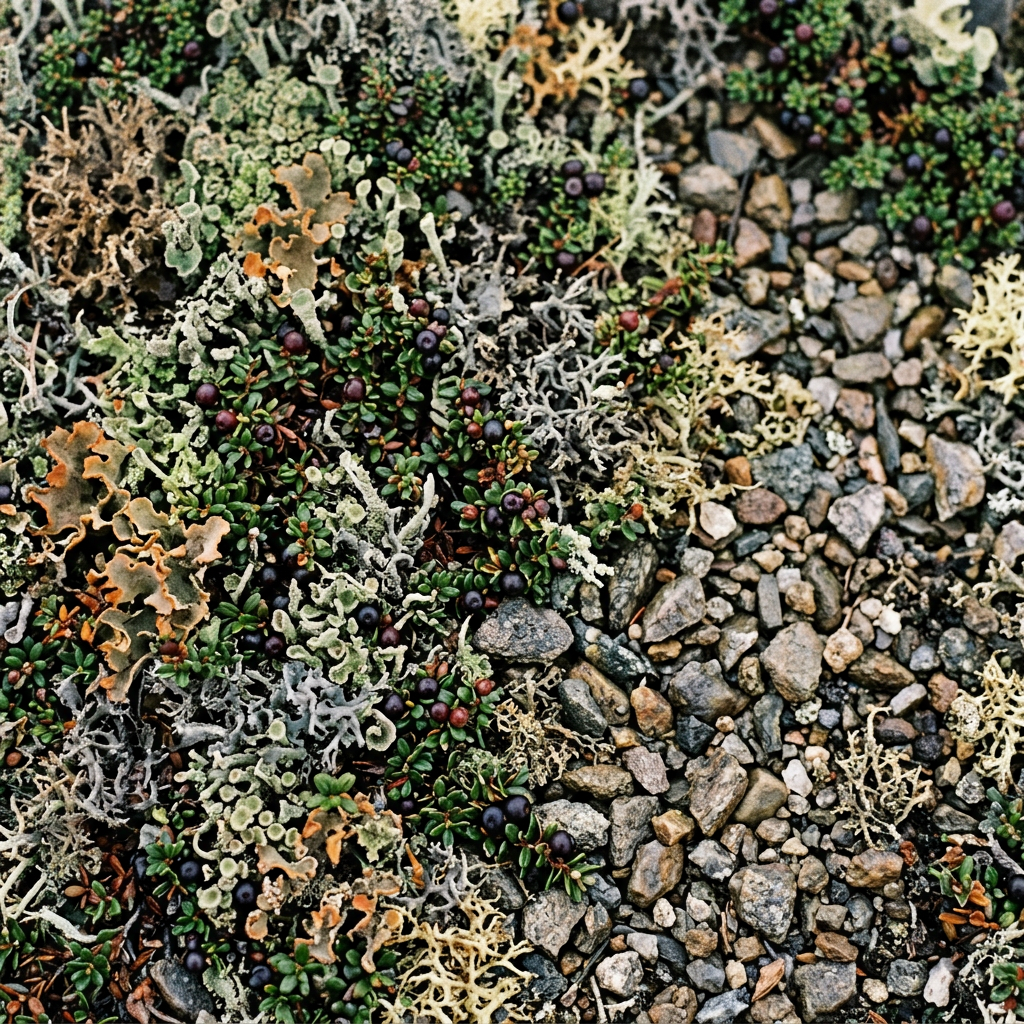
Murghab is around 4,000 people at 3,650 meters, most of them Kyrgyz rather than Tajik, and the market is a double row of shipping containers with the doors swung outward. Fuel is poured from barrels at the roadside and measured by the liter through a funnel. Electricity comes on for part of the evening. North of the town the road lifts to Ak Baital at 4,655 meters, which is 15,272 feet, and that is the high point of the whole route; the engine will feel it, and so will you on the short walk from the vehicle to the marker and back. The plain on either side runs at 3,900 to 4,100 meters, holds marmots, kulan tracks and no trees of any kind, and the wind rises after midday and drops again at dusk.
Send your dates and the office starts costing them. Putting an exact thirteen nights on paper against the driver's day rate, the permit fee and the three houses takes two to four working days, because two of those answers come back by telephone from Khorog rather than off a screen. Pine Gazette Bookings LLC owns no vehicles, no rooms and no beds anywhere in the Pamir; it holds the reservation, and the operator that puts the driver on the road writes the contract and invoices you under it. The Pine Gazette sells no airfare of any kind, so reaching Dushanbe is your own arrangement and nothing on this page assumes a particular way of doing it. The office is at 2450 Severn Avenue, Suite 312, Metairie, LA 70001, works the New Orleans metro and the rest of Louisiana, takes calls on +1 (504) 832-6194 and reads written requests at bookings@thepinegazette.com. If a number here has gone stale, write to corrections@thepinegazette.com and it gets corrected. No money changes hands at this office at any point.
Send a booking request
This form takes booking requests 24 hours a day. A person reads it and answers within one business day. Sending it is not a reservation, it costs nothing, and this office will not telephone or text you unless you ask it to.